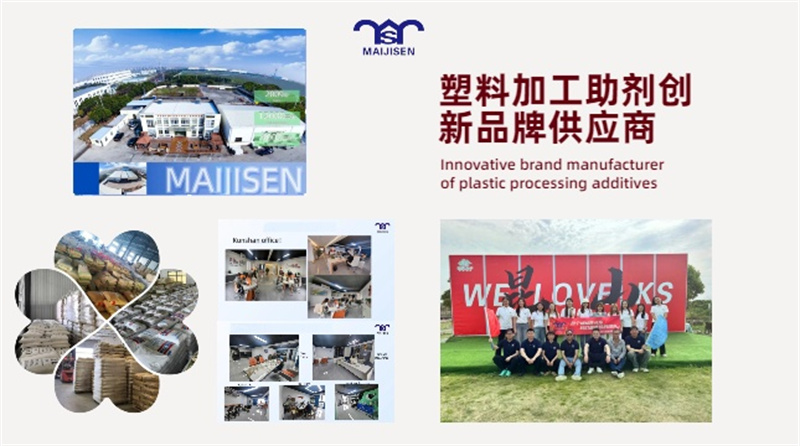
Core Pain Point in PVC Processing: Balance Lubrication and Plasticization
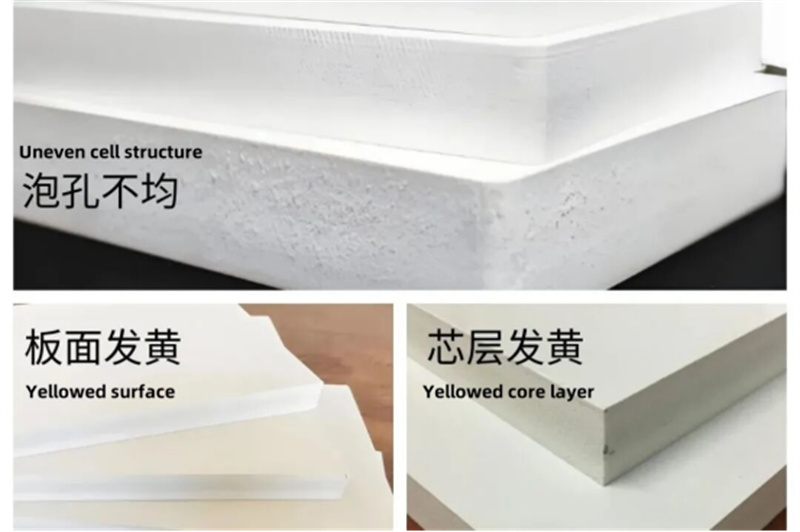
PVC processors worldwide frequently encounter persistent production issues including rough product surfaces, additive blooming, yellow discoloration, low-temperature brittleness and fluctuating throughput. Most of these failures are not caused by equipment malfunction, but stem from poor dynamic balance between lubrication system and melt plasticization. Even minor changes in the ratio of internal and external lubricants will alter melt status, pushing up reject rates, energy consumption and unplanned downtime. This technical brief summarizes field-proven adjustment strategies for PVC lubrication formulation.
Internal and External Lubricants: Core Synergy Principles
The fundamental principle of PVC lubrication design lies in the coordinated use of internal and external lubricants while avoiding antagonistic effects.
✅ Internal Lubricants: Typical options include G60 powder, stearic acid, glyceryl monostearate and calcium stearate. They penetrate PVC molecular chains to reduce intermolecular friction, promote uniform plasticization and improve melt flow, solving insufficient plasticization and poor fluidity.
✅ External Lubricants: Paraffin wax, PE wax and oxidized polyethylene wax (OPE wax) form an isolating film between melt and metal surfaces (screw, barrel, mould). The film prevents material adhesion, slows plasticization and avoids thermal degradation and yellowing triggered by over-plasticization.
In short: Internal lubricants homogenize melting; external lubricants prevent sticking and scorching.
Note: EBS serves as composite internal-external lubricant, featuring balanced compatibility.
MAIJISEN:Advantages of Lubricants
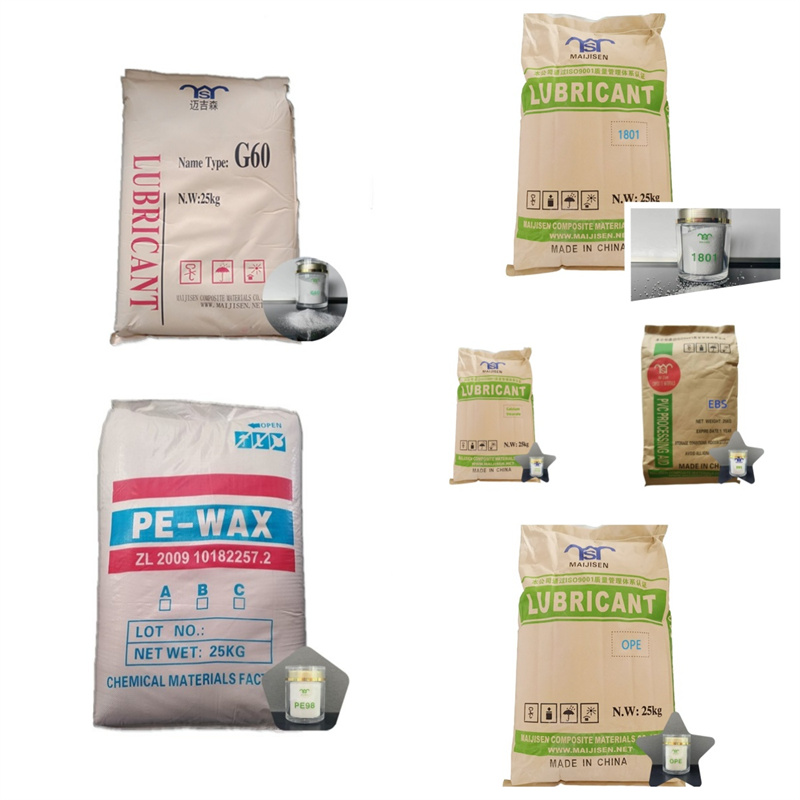
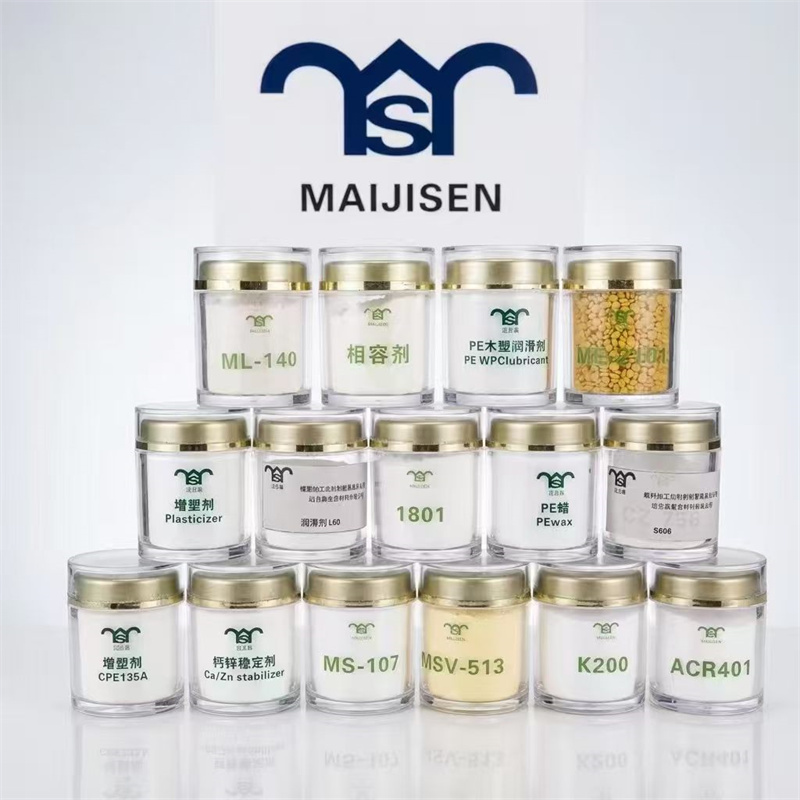
MAIJISEN supplies a complete portfolio of tailor-made lubricants for PVC manufacturing, includingcalcium stearate, high-temperature resistant OPE wax, composite EBS and high-molecular PE wax and Internal lubricant G60.
Wide effective lubrication window with low temperature sensitivity; plasticization remains stable amid seasonal temperature variation and screw speed adjustment.
Outstanding thermal stability and low volatility under high-temperature extrusion, effectively reducing mould fouling and long-run yellowing risks.
Excellent compatibility with Ca/Zn, lead salt and organotin stabilizers, preventing blooming caused by accumulated excess lubricity.
Superior dispersion performance enables homogeneous plasticization even in high-filled formulas, enhancing surface gloss and mechanical properties of finished goods.
Custom compound lubricant formulas are available to shorten trial cycles and cut production waste.
Dynamic Formulation Adjustment for Plasticization Imbalance
Lubricant dosage should be adjusted according to ambient temperature, screw speed and equipment ageing. Two typical working conditions for on-site reference:
▷Over-plasticization (yellow brittle melt, high main motor current)
Increase external lubricants (paraffin / OPE wax: 0.1–0.3 phr) or cut internal lubricant addition to slow plasticization.
▷Under-plasticization (matte rough surface, poor melt fluidity)
Add 0.2–0.5 phr calcium stearate together with ACR processing aids to boost uniform plasticization.
Application Tips:Adopt heat-resistant OPE wax for high-temperature processing to avoid lubricant volatilization. Raise internal lubricant proportion for low-temperature extrusion to guarantee melt strength.
Troubleshooting guide: Rough surface → supplement internal lubricants; mould blooming & surging → reduce total external lubricants or switch to EBS internal-external lubricant with superior compatibility.
Five-Dimension On-site Inspection of Plasticization Level
Operators can assess plasticization status without sophisticated laboratory instruments:
①Melt appearance: Smooth & homogeneous = ideal plasticization; rough texture = under-plasticization; yellow & fragile = over-plasticization & thermal degradation
②Equipment parameters: Continuous abnormal fluctuation of motor torque and current usually signals mismatched lubrication
③Finished products: Flow marks & dull surface = insufficient lubrication; bubbles, yellow streaks and black spots = thermal degradation
④Auxiliary testing: DSC analysis and yellowing index testing support quantitative evaluation to lock optimal plasticization range.
Practical Guidelines & Common Pitfalls
1.Total dosage control: 1-3 phr total lubricant addition for general PVC articles. Excessive loading leads to blooming and deteriorated tensile & impact strength.
2.Built-in lubricity of stabilizers: Lead salt and calcium-zinc stabilizers have inherent lubricating effects. Their contribution must be calculated during formula design to avoid cumulative over-lubrication.
3.Gradual adjustment rule: Single modification of each lubricant component shall not exceed 0.2 phr. Further optimization can proceed only after process stabilization. Avoid drastic formula changes.
4.Seasonal tuning: Increase external lubricant dosage in hot summer; raise internal lubricant proportion in cold winter to improve plasticization.
Selecting standardized lubrication solutions from MAIJISEN greatly improves formula tolerance compared with conventional generic wax additives. Stable lubrication performance minimizes repeated formulation debugging and sustains consistent production yield.
About MAIJISEN
MAIJISEN focuses on research, production and customization of lubricants, providing reliable lubrication solutions for PVC extrusion and injection manufacturers worldwide.