
Calcium Carbonate vs Talc vs TiO₂: Features, Uses and Selection for Plastic Processing
MAIJISEN, a supplier specializing in the R&D, production and sales of plastic processing auxiliaries,This article introduces three common mineral fillers used in plastic production: calcium carbonate, talc and titanium dioxide. The guide sets out their properties and applications to help processors match fillers to their formulation requirements.
Why Fillers Are Added in Plastic Production
Plastic resin carries a relatively high material cost, so fillers are commonly added during production to reduce cost and adjust product properties. The three most common fillers are calcium carbonate, the lowest-cost filler used mainly for cost reduction; talc, which improves hardness and rigidity and helps resist deformation; and titanium dioxide, which raises whiteness and provides strong hiding power.
Newcomers sometimes lump calcium carbonate, talc and mica powder together as generic “white powders” or “fillers”, assuming the cheapest one can simply be loaded more heavily. In PE wood-plastic formulations, however, improper addition carries measurable risks: wrong choice or excessive loading may result in brittle products, surface spots and uneven color; in severe cases, extruder backpressure rises, screws wear abnormally, and strands break or screens clog mid-production. The three fillers play different roles in a formulation, so their selection and combination should be treated separately.
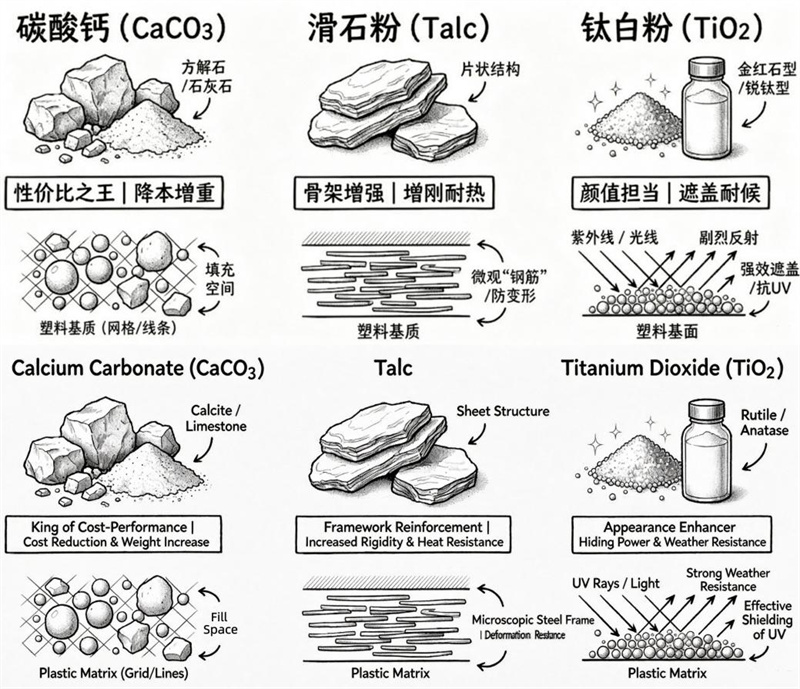
Comparison of calcium carbonate, talc and titanium dioxide.
Calcium Carbonate: The Lowest-Cost Filler
Calcium carbonate is essentially limestone ground into powder. By process it is divided into heavy calcium, milled from limestone at a lower price, and light calcium. It offers the lowest price among available fillers, and hundreds of kilograms can be added per ton of plastic to lower production cost; its typical addition level can reach 30%–50%.
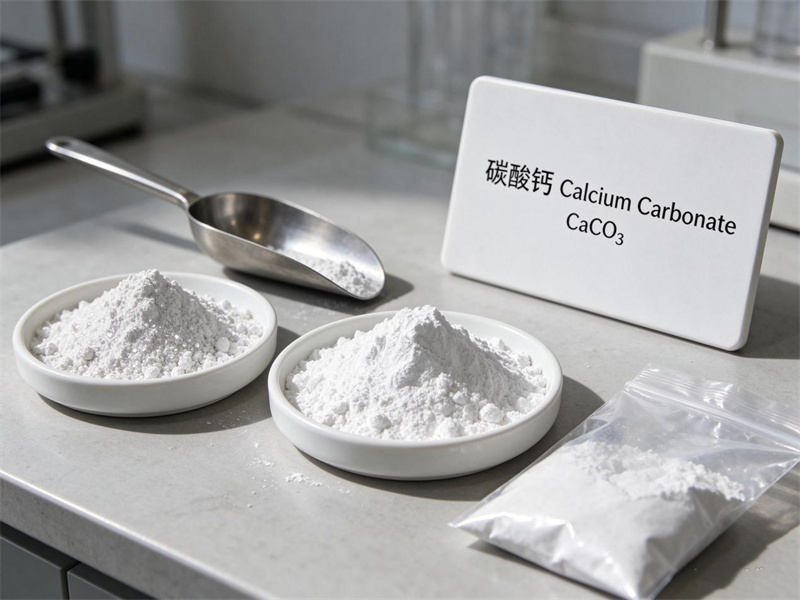
Calcium carbonate powder.
Common applications include PPR pipes, where calcium carbonate is added to reduce cost; PVC drainage pipes; injection-molded products such as plastic basins and buckets; and agricultural mulch film. In practice, PPR pipes often contain around 30% calcium carbonate; without it, pipe cost would be noticeably higher.
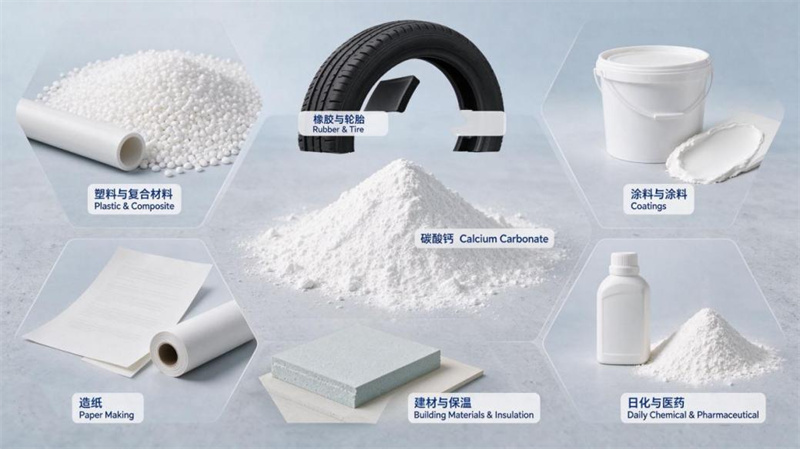
Main applications of calcium carbonate.
Talc: Improving Rigidity and Dimensional Stability
Talc is a flaky mineral powder added to improve product hardness and rigidity. It markedly raises rigidity so that products resist deformation under load, performs well at elevated temperatures without warping, and provides dimensional stability through low molding shrinkage.
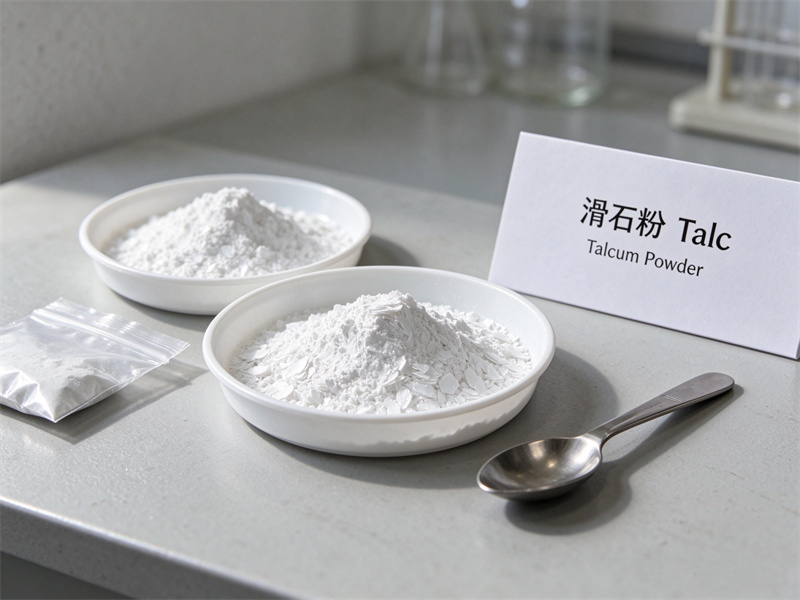
Talc powder.
Typical uses include PP-modified car bumpers, appliance housings such as TV sets and washing machine shells, PP pipes, and logistics plastic pallets. Car bumpers are commonly compounded with PP and talc precisely because the bumper resists deformation on impact and can recover its shape to some extent after talc is added.
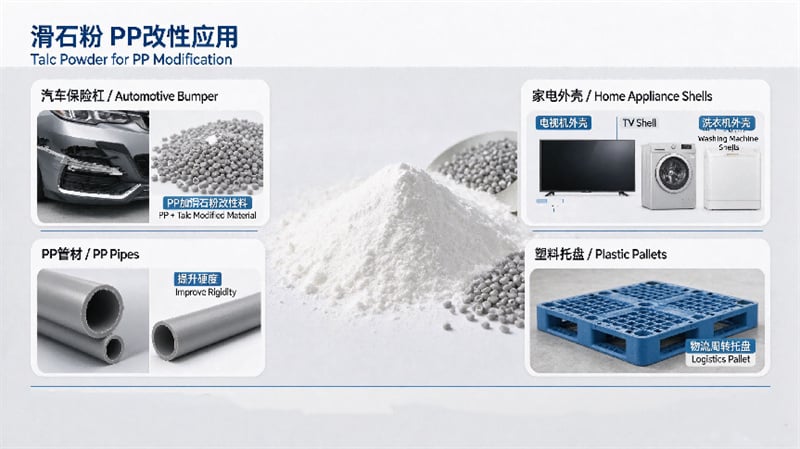
Talc applications in modified PP compounds.
Titanium Dioxide: High Whiteness and Strong Hiding Power
Titanium dioxide (TiO₂, CAS 13463-67-7), chemically titanium dioxide, is a white pigment with extremely strong hiding power. It provides the highest whiteness among pigments, strong coverage at very low addition levels, and commands the highest price of the three fillers.
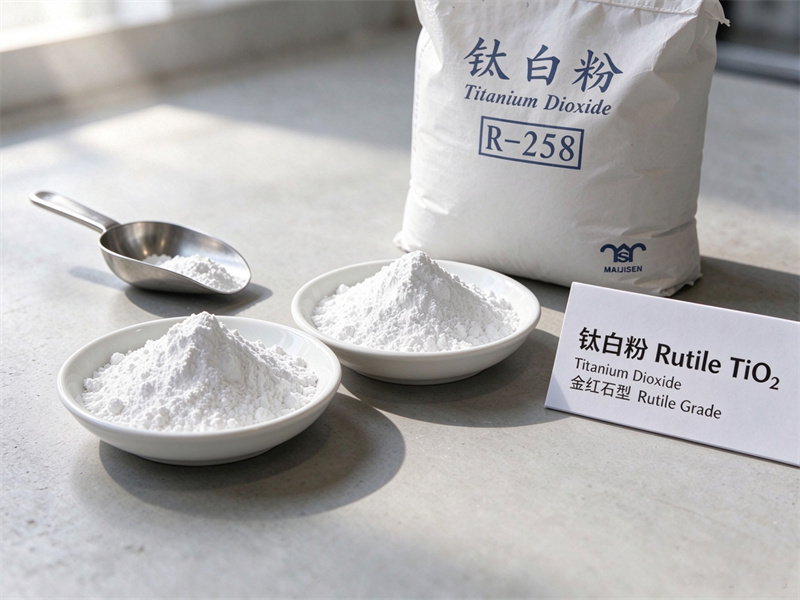
Titanium dioxide powder.
Its major application segments include the following:
- Coatings and paints (largest application): architectural exterior latex paint, real stone paint, fluorocarbon paint, outdoor floor paint and high-grade interior paint; anti-corrosion, marine, container and equipment topcoats; automotive OEM topcoat and refinish paint; powder coating, road marking paint and coil coating.
- Plastics and masterbatch (second largest application): PVC profiles, pipes and films, PP/PE films, ABS, PC and PET engineering plastics, high-concentration white masterbatch, and blow-molded or injection-molded products.
- Ink: packaging gravure and flexographic ink, offset ink, white ink for dark substrates, and UV ink.
- Paper making: decorative fire-resistant board, laminated paper and high-grade coated paper.
- Rubber and elastomers: white rubber parts, sealing strips, plastic runways and high-performance tires.
- Daily chemicals and cosmetics (cosmetic grade): physical sunscreen, foundation, powder cake and face cream.
- Other segments: ceramic glaze and enamel for whitening and improving surface gloss; high-purity electronic grade for MLCC, PTC, lithium batteries and optical materials; food and pharmaceutical grades for pharmaceutical coating and compliant food additives.
Without titanium dioxide, PP itself appears translucent and a pure white finish is difficult to achieve.
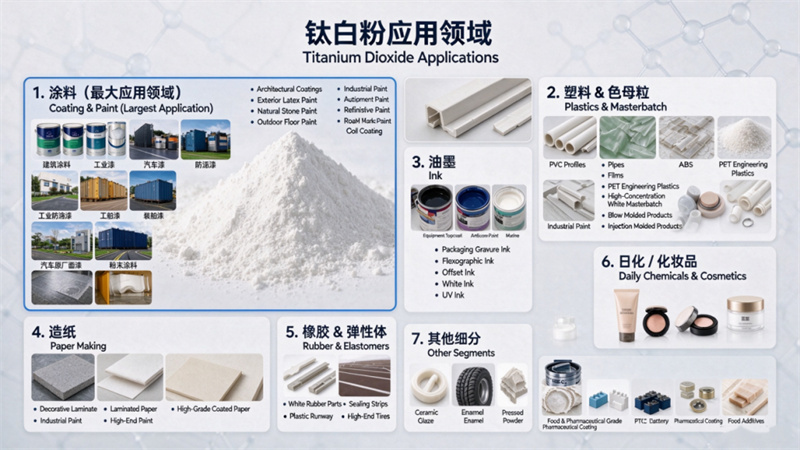
Titanium dioxide application segments.
Key Parameters at a Glance
|
Product Name |
Product Form |
Feature |
|
Calcium Carbonate (CaCO₃) |
Granule |
Weight gain and cost reduction |
|
Talc |
Flaky and Layered |
Improve rigidity, heat resistance, and prevent warping |
|
Titanium Dioxide (TiO₂) |
Submicron spherical |
Ultimate coverage, high whiteness, UV resistance |
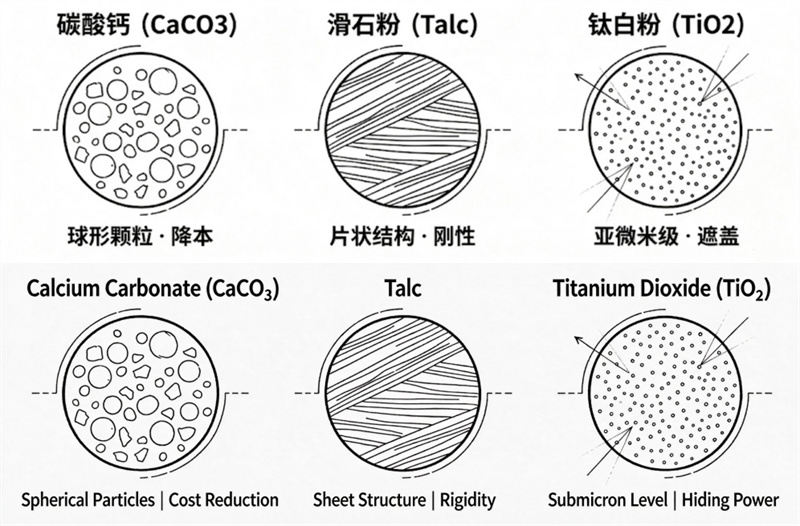
Particle morphology of the three fillers.
How to Select and Combine Fillers in Production
1.Cost-driven, high-volume products: choose calcium carbonate first. Ordinary blown film, trash bins and strapping can directly use activated heavy calcium at low cost; where toughness and dispersion are required, light calcium can be used instead, but its low bulk density and moisture absorption mean bridging and venting must be watched during feeding.
2.For stiffness, heat resistance and deformation resistance, talc is a must. Car bumpers, instrument panels, appliance housings and heat-resistant tableware (such as modified PP and PLA heat-resistant coffee cup lids) are typically loaded with 15%–20% high-mesh talc.
3.For light-colored, high-whiteness and outdoor parts, rely on titanium dioxide. When making white products, more calcium powder does not automatically provide enough whiteness; without TiO₂ light scattering, the base color always looks dull and translucent. Outdoor profiles and pipes should use rutile-grade TiO₂ to block UV; switching to anatase grade to save cost can lead to chalking and yellowing quickly.
About MAIJISEN
Maijisen is an innovative enterprise focused on the R&D, production and sales of plastic processing auxiliaries. With technological innovation as the core and quality service as the foundation, the company has deepened its presence in the rubber, plastic and flooring auxiliary sector, and is committed to providing global customers with efficient, environmentally friendly one-stop solutions and win-win cooperation. Main products include titanium dioxide, calcium-zinc stabilizers, AC/NC foaming agents, foaming regulators, plasticizers, CPE, lubricants and modifiers, among other new chemical raw materials.
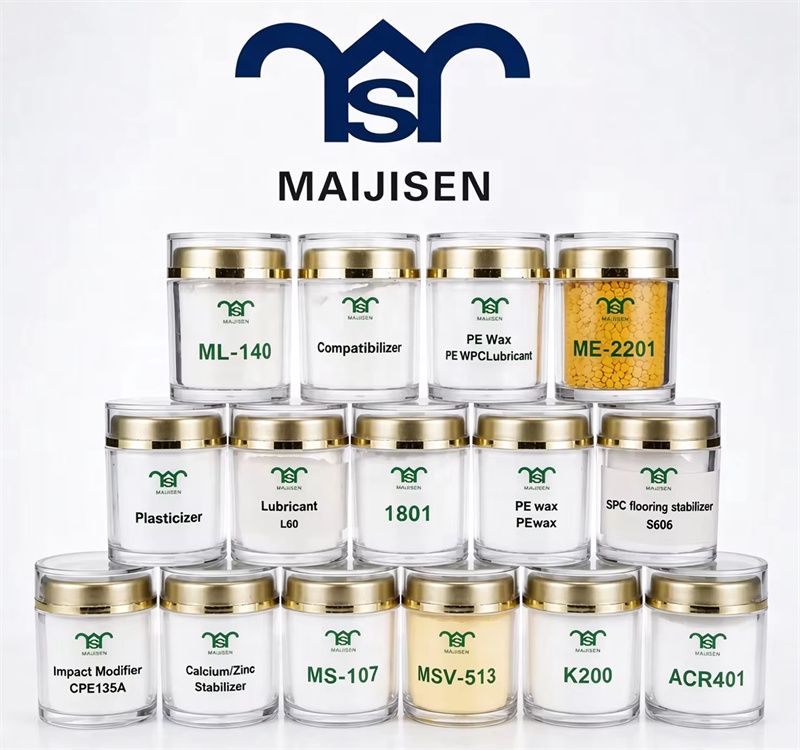
Complete product series display.
Key Product: Rutile Titanium Dioxide R-258
Titanium dioxide (TiO₂, CAS 13463-67-7) is a fine white powder available in rutile (R) and anatase (A) crystal forms. Rutile grade offers high whiteness, strong hiding power and good weather resistance, and blocks UV, making it suitable for light-colored and high-whiteness products such as outdoor profiles, pipes and white appliance housings. Anatase grade also provides good whiteness and hiding, but with lower weather resistance, and is better suited to indoor applications. Titanium dioxide rutile grade R-258 can be used in white plastics, coatings, paper and cosmetics, with stable supply, samples and application advice available.
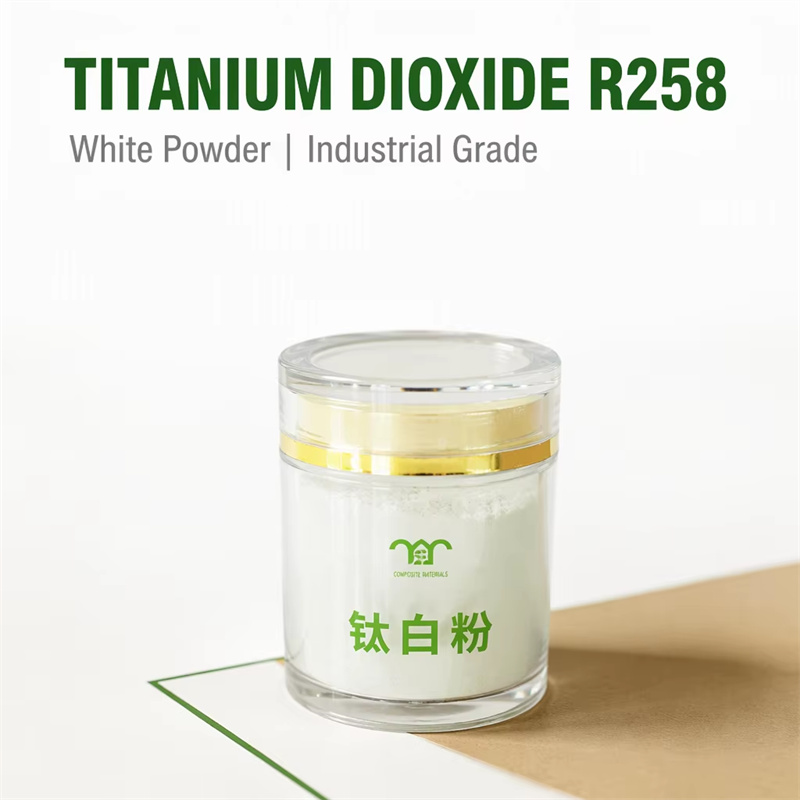
Titanium Dioxide Powder.
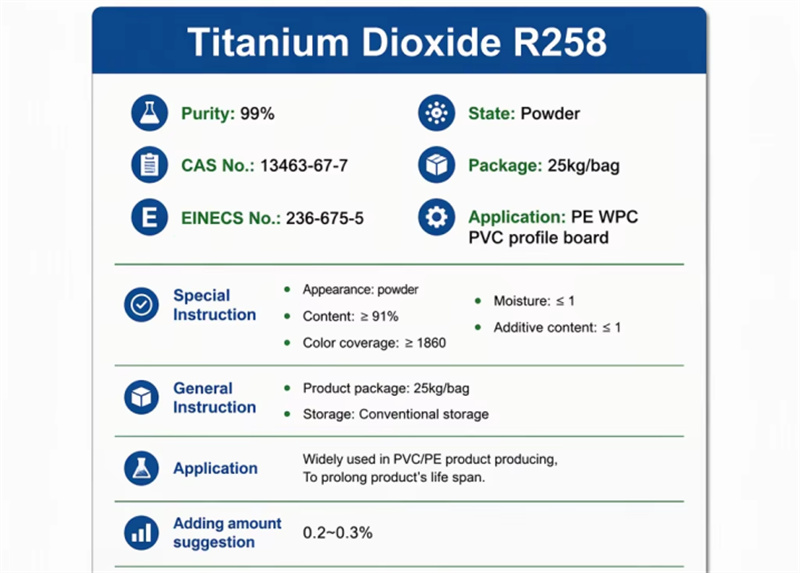
Titanium Dioxide product specification.
Contact Us
For samples, formulation selection or application advice on titanium dioxide and other auxiliaries, please contact the MAIJISEN team. We will provide matching solutions and technical support based on your product requirements.
